



How to Care for Your Paddleboard and Gear in the Off-Season

Keep Your Hydrus Gear Adventure-Ready Year-Round
When the temperatures drop and rivers start to freeze, it’s time to trade summer paddles for cozy evenings and warm drinks. But before you hang up your paddleboard for the season, give your gear a little love. Proper off-season maintenance doesn’t just help your board last longer, it ensures you’re ready to hit the water the moment spring returns.
At Hydrus, we build our boards to be nearly indestructible, but that doesn’t mean they don’t deserve some TLC. Here’s your complete guide to cleaning, inspecting, and storing your SUP and gear through the off-season.
Why Off-Season Maintenance Matters
Taking a few hours now to clean and store your paddleboard properly can save you frustration (and money) later.
Here’s why this step is so important:
-
Prevents wear and tear: Dirt, salt, and moisture can degrade materials over time.
-
Extends lifespan: Regular maintenance helps protect your investment.
-
Ensures safety: Small cracks or weak spots can worsen over winter if not addressed early.
-
Keeps your setup organized: You’ll start next season fresh and ready, not digging through gear chaos.
Step 1: Clean Your Board Thoroughly
Even if your last paddle felt clean, your board has likely collected grime, algae, sunscreen, and dust.
Here’s how to give it a proper clean:
-
Rinse with fresh water – Use a hose or bucket to remove salt, sand, and debris. Saltwater, especially, can corrode hardware over time.
-
Use mild soap – Mix a few drops of gentle dish soap with warm water. Avoid harsh chemicals that can damage your board’s surface or the Hydrus deck pad.
-
Scrub softly – Use a soft sponge or microfiber cloth to remove any grime. Pay attention to the seams, fin box, and traction pad edges.
-
Rinse again and dry completely – Let your board air dry in a shaded area. Never store it while damp, as trapped moisture can cause mildew or adhesive weakening.
-
Apply 303 Protectant –
How to Apply 303 Protectant on Your Paddleboard

-
Clean and dry first:
The board should be completely clean and dry before application. Applying protectant on dirt or moisture traps residue and reduces effectiveness. -
Spray lightly on a microfiber cloth (not directly on the board):
It’s best to spray the protectant onto a cloth, then wipe the board down. This gives you more control and prevents over-spraying onto unwanted areas. -
Focus on smooth PVC or composite surfaces:
Apply it evenly over the rails, bottom, and deck (except the traction pad). These are the areas most affected by UV exposure. -
Avoid the deck pad:
Do not spray directly on your traction pad. It can make the surface slick and reduce grip. If overspray happens, wipe it off immediately with a damp cloth. -
Buff off any excess:
After wiping, go over the surface with a clean, dry section of your cloth to remove any extra residue. The protectant should leave a clean, dry finish — not greasy or shiny. -
Reapply every few months:
303 Protectant typically lasts 4–6 weeks in direct sunlight, but if your board is stored indoors for winter, one coat at the end of the season is perfect for protection until spring.
If you have an inflatable Hydrus board (like the Joyride, Elysium Air, Paradise, or Axis), keep it partially inflated until it’s completely dry to help it air out evenly.
-
Step 2: Inspect for Damage
Before packing your gear away, take a close look at everything. This is the best time to spot small issues before they turn into big ones.
Check the following:
-
Board Surface: For hard boards, look for scratches, dents, or soft spots.
-
Valves and Seams: For inflatables, ensure the valve isn’t leaking and seams look tight.
-
Fins and Boxes: Check for cracks or looseness. Remove fins for storage to prevent warping or damage.
-
Paddle: Look for chips or cracks.
-
Leash and Attachments: Make sure your D-rings, leash cords, and handles are still secure.
If you find anything questionable, reach out to us at crew@hydrusboardtech.com. Jason and I are always happy to help troubleshoot or repair before next season starts.
Step 3: Store Your Board Properly
Where and how you store your paddleboard during the off-season can make a big difference in how it performs next year.
For Inflatable Boards
Inflatable SUPs like the Joyride, Paradise, and Axis are incredibly durable, but proper storage keeps them in top shape:
-
Clean and dry first: Any trapped moisture can lead to mildew.
-
Deflate slightly, not all the way: Keep a little air inside to maintain the board’s shape.
-
Loosely roll, don’t fold: Rolling avoids creating sharp creases.
-
Store indoors: A cool, dry spot like a closet, garage, or attic.
-
Avoid stacking heavy items: Don’t place boxes or gear on top of your rolled board.
- Optional: If you have a rack to keep them inflated and stored in a garage, even better!
For Hard Boards
Hard boards are built to endure rugged conditions, but still need proper off-season care.
-
Keep it supported: Store horizontally on padded racks or vertically on a soft surface.
-
Avoid direct sunlight: UV rays can fade the finish and weaken materials over time.
-
Maintain stable temperature: A climate-controlled garage or storage room is best.
-
Cover it: Use your board bag or a breathable cover to protect against dust and scratches.
If you hang your board on a wall, make sure the weight is evenly supported and that pressure points aren’t concentrated in one spot.
Step 4: Care for Your Paddle and Accessories
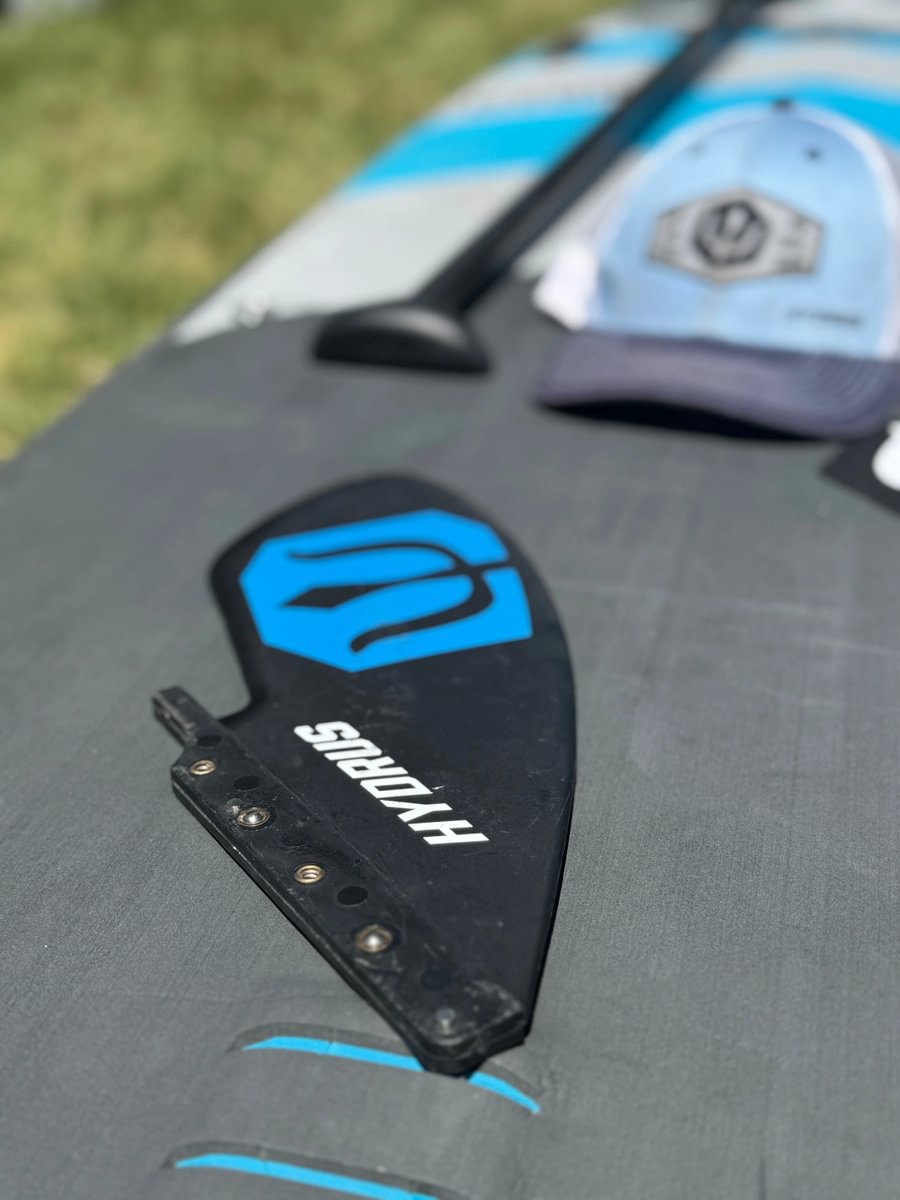
Your paddle deserves just as much attention as your board.
-
Rinse with fresh water after every use, especially if you paddle in saltwater.
-
Disassemble adjustable paddles and let them dry completely before storage. This prevents corrosion and sticking.
Accessories checklist:
-
Fins: Clean and store.
-
Pump: For inflatables, check the hose. Store inside to prevent the seals from freezing or drying out.
-
Leash: Rinse and dry it fully, then coil it loosely.
-
Dry Bags and PFDs: Open, rinse, and dry before packing away.
If you’ve had your gear for several seasons, this might be a good time to replace small items like fins, leashes, or dry bags.
Step 5: Organize Your Storage Space
Once your board and accessories are clean and dry, take a few minutes to organize your gear area. It’ll make gearing up in spring much easier.
Try these tips:
-
Hang paddles and PFDs on wall hooks.
-
Use labeled bins for accessories like fins, straps, and repair kits.
-
Keep your repair kit handy and up to date.
-
Store gear off the floor to prevent moisture damage.
This is also a good time to evaluate what you have and what you might need for next season. If you’re missing anything—like a quick-release leash, dry bag, or a spare fin—add it to your list now so you’re not scrambling later.
Step 6: Mid-Winter Check-In
If your board is stored for several months, do a quick check halfway through winter. Make sure the space is still dry, nothing heavy has shifted onto your board, and there’s no sign of pests or mildew.
A few minutes now can save you from surprises when spring rolls around.
Step 7: Reflect and Plan for Next Season

The off-season isn’t just for storage—it’s also a great time to reflect on your paddling adventures and set goals for next year.
Think about:
-
New places you want to explore.
-
Skills you want to improve (like pivot turns or SUP yoga).
-
Gear upgrades or accessories to add.
-
Friends or family you want to paddle with.
You can even start a journal or vision board for your 2026 paddling adventures.
Bonus: Give Your Gear Some Holiday Cheer
If you’re storing gear in December, it’s also the perfect time to gift new accessories or upgrade essentials. A new paddle, fin, or even a board bag makes an awesome gift for yourself or another paddler in your life.
And if you’re already thinking ahead, Hydrus has our presale running right now. It’s the best time to grab a new board at a discounted price before the spring rush.
Nothing beats giving (or getting) the gift of adventure, health, and time on the water.
The Bottom Line
Taking time to clean, inspect, and properly store your SUP gear keeps your investment protected and ensures you’re ready to paddle when the weather warms up again.
Hydrus boards are built to last, but good care helps them last even longer. Think of it as giving your board a well-earned winter nap.
If you have questions about repairs, storage, or off-season upgrades, we’re always here to help. Reach out anytime at crew@hydrusboardtech.com. Whether you’re a whitewater warrior, a touring explorer, or a casual cruiser, your Hydrus family has your back through every season.

About the Author
Angela Nichole leads customer experience and creative direction at Hydrus Board Tech. A CrossFit and yoga instructor with a background in functional fitness and wellness, Angela writes to empower paddlers of all levels. With a passion for movement, community, and quality gear, she brings a grounded and inclusive voice to the Hydrus blog. Angela plays a key role in shaping the Hydrus experience on the water, behind the scenes, and through every customer connection. Get to know Angela here.
Who makes the multi board wall rack system shown in article?
Leave a comment